TERT and FieldComm 91
Telecommunicator Emergency Response Team & Tactical Field Communications
What is a Telecommunicator Emergency Response Team?
- Providing relief and support for overwhelmed local telecommunicators.
- Managing high call volumes during emergencies.
- Facilitating effective coordination between emergency services.
Capabilities of Tactical Field Communications Unit - 91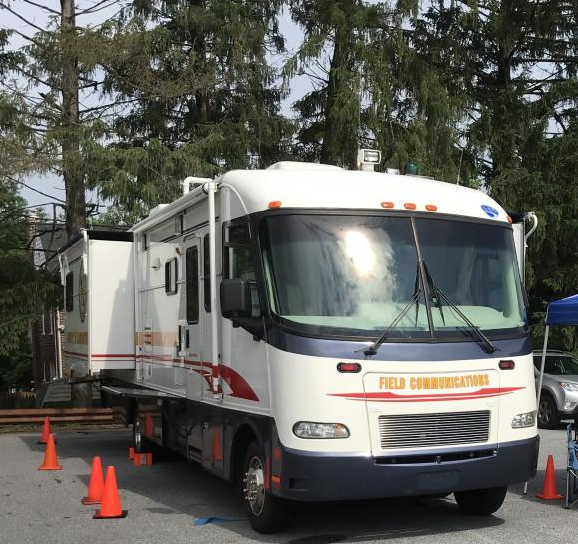
The Tactical Field Communications Unit is equipped to provide on-scene communications and coordination needs. The unit will normally respond with three LCWC personnel consisting of a Communications Supervisor, a Telecommunicator, and a Radio Technician. Additional personnel will respond as needed by the situation. Key capabilities include:
- Programmable radios capable of operating on all frequencies.
- Radios are pre-programmed with all Lancaster County frequencies and frequencies for surrounding Counties and State agencies.
- Radios can be reprogrammed on the scene by a Radio Technician.
- Twelve portable radios and a repeater system are available to hand out to special tactical teams.
- The JPS radio interconnect unit can cross-patch any combination of radios together to allow communications between agencies on different radio systems.
- Trunked radio for communicating on Chester County's 800Mhz Radio System.
- Aviation radio for communicating with helicopters and airports.
How They Work Together
In emergencies, the TERT and Tactical Field Communications Unit collaborate to create a robust response framework. While TERT focuses on call management and dispatch, the Tactical Field Communications Unit ensures that all communication systems remain operational. Together, they:aintain seamless communication flow between responders and the command center.- Ensure rapid deployment of resources to affected areas.
- Support local and state emergency management agencies during disasters.